| IO-202 Mechanism of Action | |
| Antibody-Dependent Cellular Cytotoxicity and Phagocytosis | |
| Step | Description |
|---|---|
| 1. Target Binding | IO-202 binds LILRB4 on monocytic cells |
| 2. Fc Engagement | IgG1 Fc region engages effector cells |
| 3. Effector Recruitment | NK cells and macrophages recruited |
| 4. Cell Elimination | ADCC and ADCP deplete LILRB4+ cells |
4 IO-202 (Anti-LILRB4 antibody)
5 Executive Summary
NoteKey Findings
The IO-202 Phase 1 study (Aribi et al., Blood Neoplasia 2025) demonstrates promising efficacy in HMA-naïve CMML with a 27.8% CR rate and 66.7% ORR, exceeding historical hypomethylating agent benchmarks.
The IO-202 Phase 1 study represents a significant advancement in targeted therapy development for chronic myelomonocytic leukemia (CMML) and monocytic acute myeloid leukemia (AML). IO-202 is a first-in-class humanized IgG1 monoclonal antibody targeting leukocyte immunoglobulin-like receptor B4 (LILRB4/ILT3), predominantly expressed on monocytes and monocytic blasts.
Citation: Aribi A, et al. Blood Neoplasia 2025;2(4):100126. DOI: 10.1016/j.bneo.2025.100126
6 Study Design and Drug Overview
6.1 IO-202 Mechanism of Action
6.1.1 Key Mechanistic Features
- Target Specificity: LILRB4 expression is restricted to monocytic lineage cells, with significantly higher expression on neoplastic cells compared to normal monocytes
- Effector Function: Induces antibody-dependent cellular cytotoxicity (ADCC) and antibody-dependent cellular phagocytosis (ADCP)
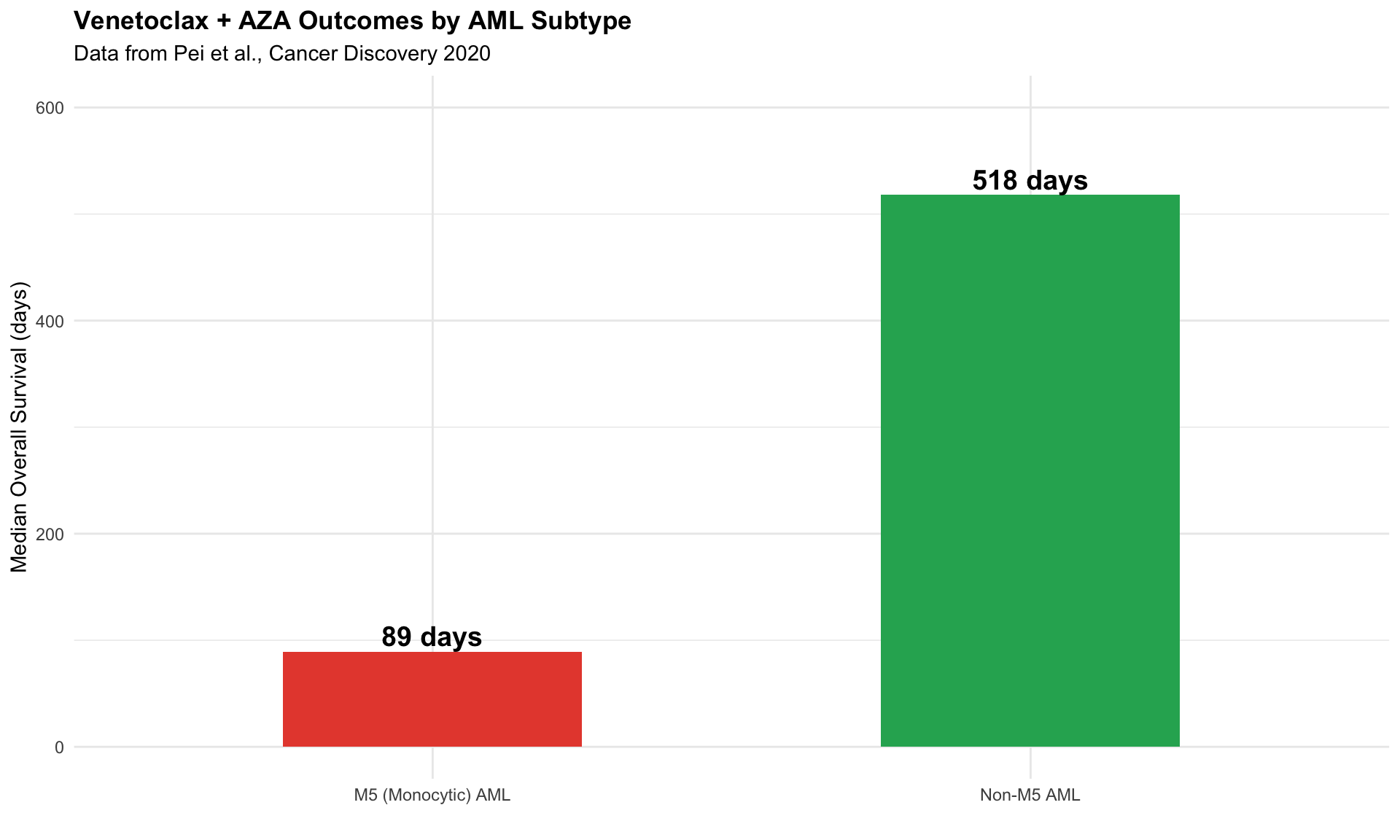
- Resistance Implications: LILRB4-positive monocytic AML cells are associated with venetoclax resistance, providing scientific rationale for this approach
6.2 Study Design
| Study Design Parameters | |
| Parameter | Details |
|---|---|
| Study Type | Phase 1a dose-escalation + Phase 1b dose-expansion |
| Registration | NCT04372433 |
| Part 1A | IO-202 monotherapy: 0.03-60 mg/kg Q2W (31 patients) |
| Part 1B | IO-202 + AZA combination (15 patients) |
| Part 2A | IO-202 + AZA for LILRB4-high R/R monocytic AML (2 patients) |
| Part 2B | IO-202 + AZA for HMA-naïve CMML (21 patients) |
| RP2D | 60 mg/kg loading dose (Day 1), then 30 mg/kg Q2W |
| Response Criteria | 2015 IWG MDS/MPN criteria (CMML); ELN 2017 (AML) |
7 Efficacy Results: Detailed Analysis
7.1 HMA-Naïve CMML Cohort (Part 2B)
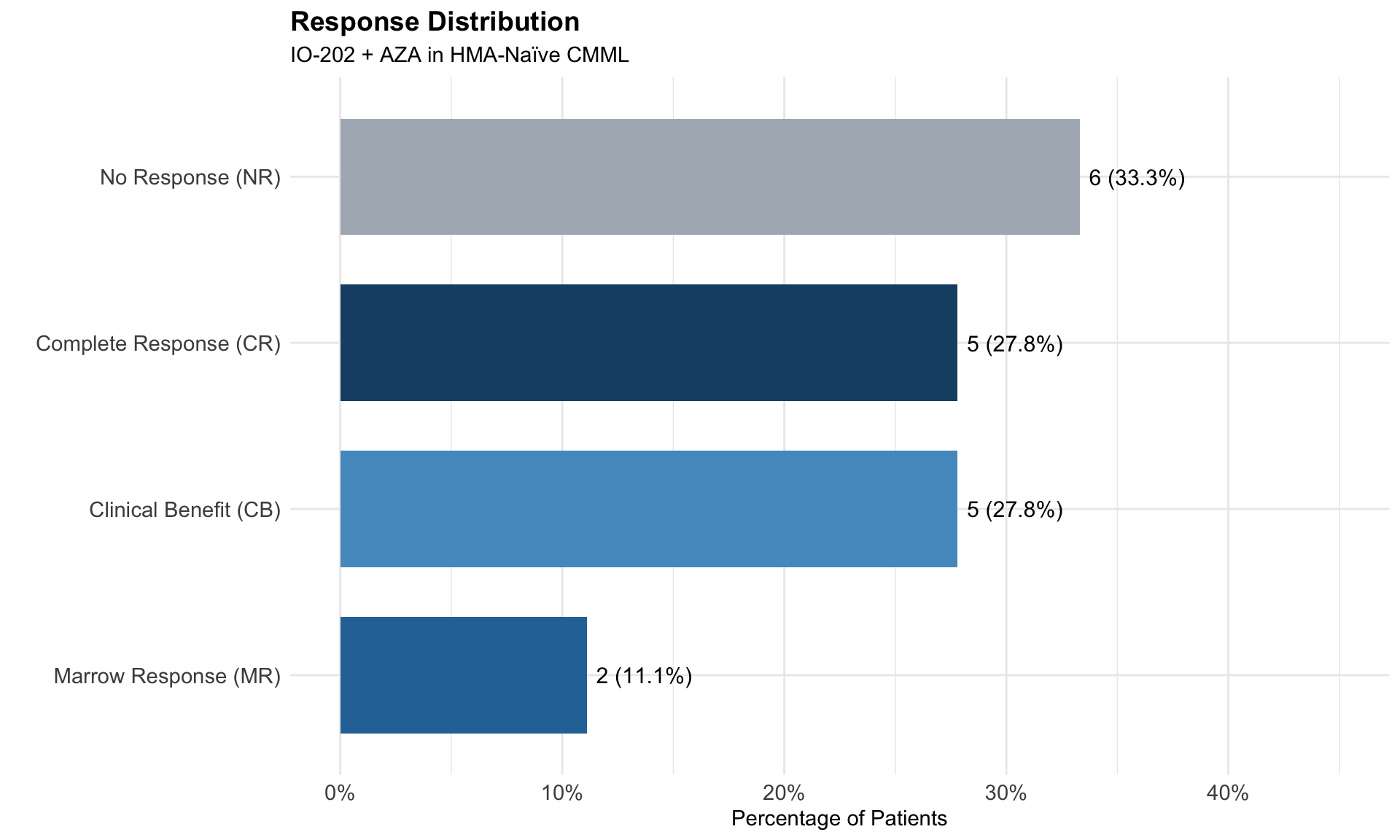
This represents the most robust efficacy data from the study, with 21 enrolled and 18 efficacy-evaluable patients.
7.1.1 Primary Efficacy Endpoints
| Primary Efficacy Results | ||
| IO-202 + Azacitidine in HMA-Naïve CMML | ||
| Endpoint | Result | N |
|---|---|---|
| Complete Response (CR) | 27.8% | 5/18 |
| Overall Response Rate (ORR) | 66.7% | 12/18 |
| Clinical Benefit Rate | 100% | 18/18 |
| Bridge to Allo-HCT | 38.9% | 7/18 |
| Median Time to First Response | 1 cycle | - |
| Median Time to Best Response | 3 cycles | - |
7.1.2 Response Breakdown by Category
7.1.3 Clinically Meaningful Secondary Endpoints
| Secondary Efficacy Outcomes | ||
| Endpoint | Result | Population |
|---|---|---|
| Blast Control (BM blasts <5%) | 100% | All patients |
| Monocyte Normalization (≤1 × 10⁹/L) | 88% | All patients |
| WBC Control (≤10 × 10⁹/L) | 93% | All patients |
| Hemoglobin Improvement (≥11 g/dL) | 44% | Baseline Hgb <11 |
| Transfusion Independence | 57.1% | Transfusion-dependent |
| Platelet Recovery (≥100 × 10⁹/L) | 50% | Thrombocytopenic |
| Symptom Improvement (≥50% MPN-SAF TSS reduction) | 100% | MPN-SAF TSS >15 |
7.2 Biomarker-Response Correlation
ImportantKey Biomarker Finding
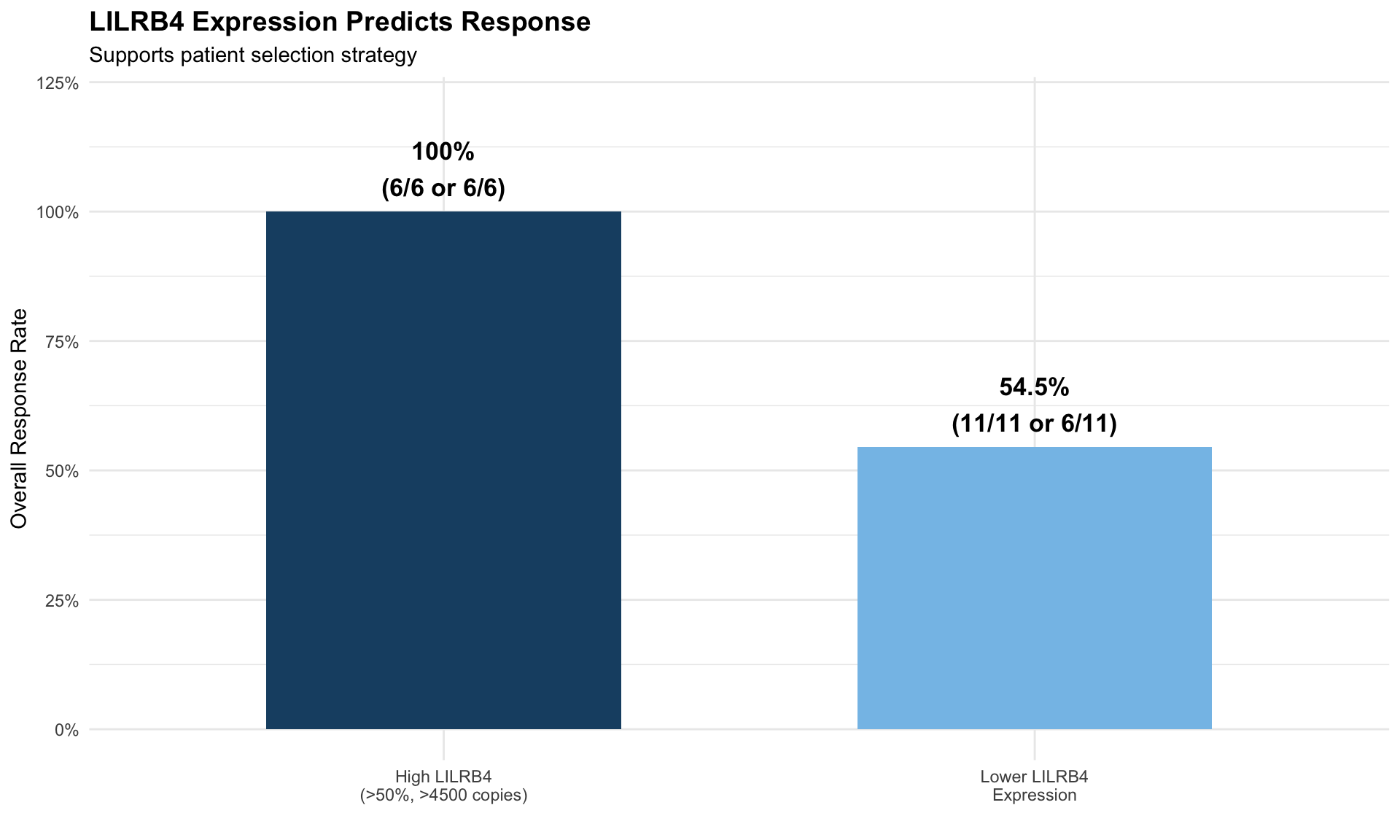
Patients with high LILRB4 expression (>50% positive blasts and >4500 copies/cell) achieved 100% ORR compared to 54.5% in lower expressors.
7.2.1 Molecular Response
A notable finding was the clearance of KRAS mutant alleles:
- 3/3 patients with baseline KRAS mutations and available post-treatment data demonstrated complete clearance
- This suggests potential disease-modifying activity beyond symptomatic improvement
- RAS mutations are associated with poorer response to HMA monotherapy
8 Safety Profile
8.1 Overall Safety Summary
| Safety Overview | ||
| Treatment-Emergent and Treatment-Related Adverse Events | ||
| Category |
Incidence
|
|
|---|---|---|
| TEAEs | TRAEs | |
| Any grade AE | 100% | 90.5% |
| Grade ≥3 AE | 71.4% | 52.4% |
| Grade ≥3 leading to discontinuation | 4.76% | 4.76% |
| Serious AEs | 33.3% | 28.6% |
| SAE leading to death | 4.76% | 0% |
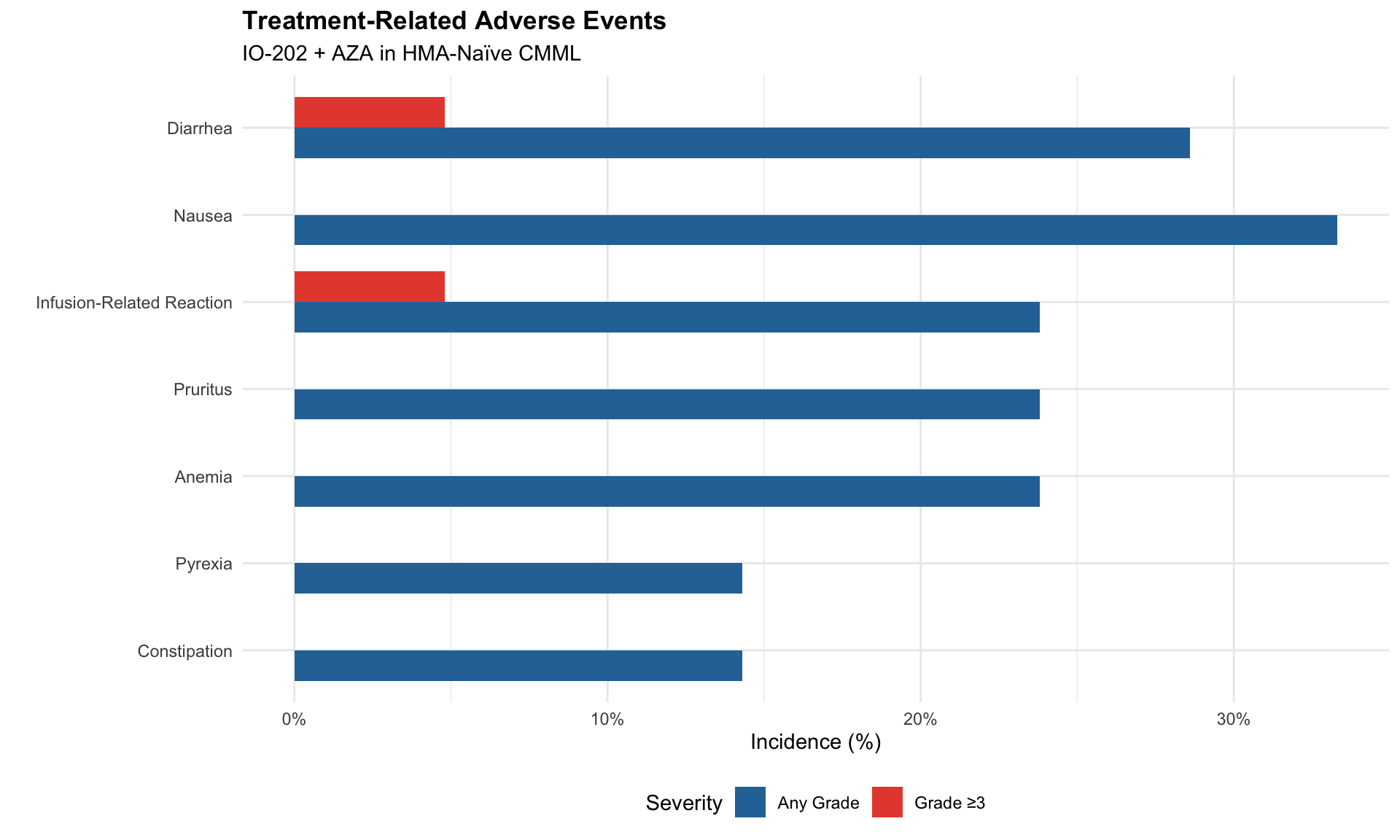
8.2 Most Common Treatment-Related Adverse Events
8.2.1 Key Safety Observations
- No dose-limiting toxicities (DLTs) observed
- Maximum tolerated dose not reached
- Infusion-related reactions (IRRs): 13% overall (9/69 patients); mostly Grade 1-2, manageable with premedication
- Only 3 Grade 3 TRAEs attributed to IO-202: diarrhea, somnolence, IRR (all resolved)
9 Comparative Analysis: CMML Therapeutic Landscape
9.1 Current Standard of Care Benchmarks
| CMML Therapeutic Landscape | |||||
| Comparative Efficacy Data | |||||
| Agent | Target | CR Rate | ORR | Median OS | Source |
|---|---|---|---|---|---|
| IO-202 + AZA (HMA-naïve) | LILRB4 | 27.8% | 66.7% | NR | Aribi 2025 |
| AZA monotherapy (historical) | DNA methylation | 10-17% | 30-50% | 18-24 mo | Meta-analyses |
| Decitabine/cedazuridine | DNA methylation | 21% | 76% | 35.7 mo | Savona 2025 |
| Tagraxofusp (CD123) | CD123 | 0% | 0% | 11.2 mo | Patnaik 2025 |
| STX-0712 (CCR2 CyTAC) | CCR2 | TBD | TBD | TBD | Phase 1 ongoing |
9.2 IO-202 vs. Tagraxofusp (CD123-targeted)
The tagraxofusp Phase 1/2 study (Patnaik et al., Blood Neoplasia 2025) provides a direct comparison for targeted therapy approaches in CMML:
| Targeted Therapy Comparison | ||
| IO-202 vs. Tagraxofusp in CMML | ||
| Parameter | IO-202 + AZA | Tagraxofusp |
|---|---|---|
| Target | LILRB4 (ILT3) | CD123 (IL-3Rα) |
| Mechanism | mAb (ADCC/ADCP) | Toxin conjugate |
| CR Rate | 27.8% | 0% |
| ORR | 66.7% | 0% (CR/PR) |
| Clinical Benefit | 100% | 23-27% |
| Key AEs | IRR (23.8%), nausea (33%) | CLS (23%), TLS (13%) |
| Population | HMA-naïve CMML | TN and R/R CMML |
TipKey Differentiator
IO-202 + AZA demonstrates substantially higher response rates compared to tagraxofusp, with a more favorable safety profile (no capillary leak syndrome or tumor lysis syndrome).
9.3 Emerging Pipeline: STX-0712
STX-0712 (Solu Therapeutics) represents another emerging approach targeting CCR2 on monocytic cells:
| Parameter | IO-202 | STX-0712 |
|---|---|---|
| Target | LILRB4 | CCR2 |
| Platform | Humanized IgG1 mAb | CyTAC (small molecule + mAb) |
| Mechanism | ADCC/ADCP | ADCC-mediated killing |
| Stage | Phase 1b complete | Phase 1 dose-escalation |
| Registration | NCT04372433 | NCT06950034 |
| Efficacy Bar | 27.8% CR, 66.7% ORR | Must match or exceed |
10 Monocytic AML: The Venetoclax Resistance Challenge
10.1 Scientific Rationale
A major driver of interest in monocyte-targeted therapies is the well-documented venetoclax resistance in monocytic leukemias.
10.1.1 Key Resistance Mechanisms
- MCL1 Upregulation: Monocytic AML cells bypass BCL2 dependence through MCL1
- Metabolic Reprogramming: Increased glycolysis in resistant monocytic populations
- Differentiation State: More mature monocytic phenotype associated with resistance
- Genetic Correlates: GEN-PHEN-VEN study showed monocytic differentiation in NPM1 wild-type cases increases death risk (HR = 1.89)
10.2 IO-202 Results in AML Context
While the primary focus was CMML, AML data provides important signals:
| Population | Result | Details |
|---|---|---|
| R/R AML Monotherapy (Part 1A) | Limited activity | Most at low dose levels |
| R/R AML + AZA (Part 1B) | 1 CR (10%) | Duration >14 months |
| LILRB4-high R/R AML (Part 2A) | 1/2 MLFS | Morphologic leukemia-free state |
11 Critical Analysis
11.1 Strengths
- 27.8% CR and 66.7% ORR exceed historical HMA monotherapy benchmarks
- Rapid responses: Median 1 cycle to first response (vs. 2-4 months for AZA)
- 100% clinical benefit rate including symptom improvement
- 38.9% bridge to transplant demonstrates clinical utility
- LILRB4 expression correlates with response (100% ORR in high expressors)
- KRAS mutation clearance in 3/3 patients suggests disease modification
- Supports rational patient selection strategy
- No DLTs observed
- Manageable IRRs with premedication
- Low discontinuation rate (4.76%)
- No capillary leak syndrome or tumor lysis syndrome
11.2 Limitations
| Key Limitations | |
| Limitation | Impact |
|---|---|
| Small sample size | Only 18 efficacy-evaluable CMML patients limits statistical confidence |
| No randomized comparison | Cannot definitively attribute benefit to IO-202 vs. AZA alone |
| Selection bias | HMA-naïve population may have more favorable biology than R/R |
| Survival data immature | Overall survival and duration of response data still accumulating |
| ASXL1 enrichment | 71.4% ASXL1+ (vs. ~40% expected) may affect outcome comparisons |
| Limited AML data | Insufficient R/R AML enrollment to draw definitive conclusions |
12 Conclusions and Future Directions
12.1 Key Takeaways
NoteSummary
IO-202 + AZA represents a promising first-in-class targeted approach for HMA-naïve CMML with clinical activity exceeding historical benchmarks. The favorable safety profile, rapid onset of response, and predictive biomarker support further development.
12.2 Anticipated Next Steps
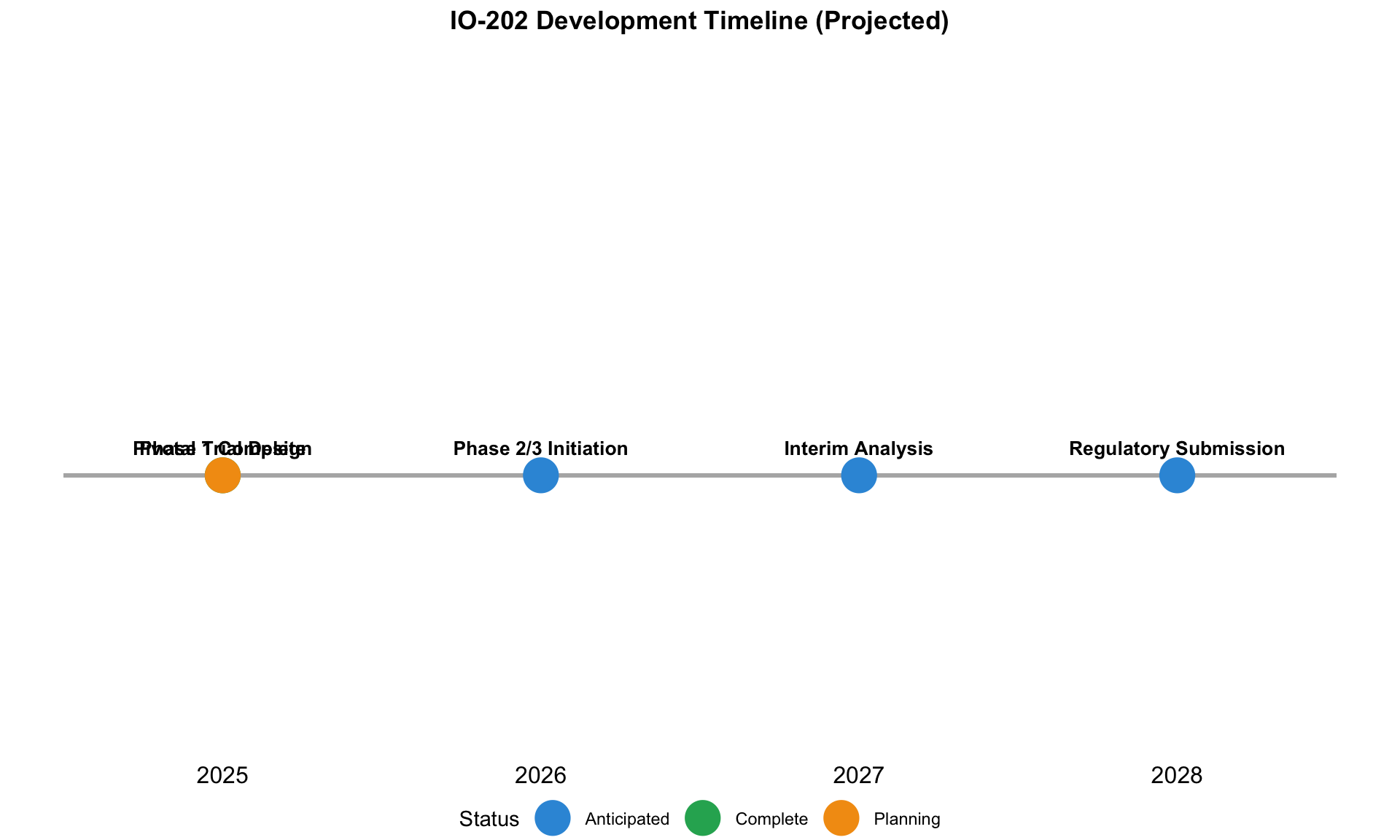
12.2.1 Development Priorities
- Pivotal Trial: Randomized Phase 2/3 study of IO-202 + AZA vs. AZA alone in HMA-naïve CMML
- Biomarker Validation: Prospective validation of LILRB4 expression as patient selection marker
- AML Expansion: Focused evaluation in LILRB4-high monocytic AML, potentially in venetoclax-refractory setting
- Combination Strategies: Exploration with venetoclax-based regimens for monocytic malignancies
13 References
Aribi A, et al. A phase 1 study of IO-202, an anti-LILRB4 antibody, in chronic myelomonocytic leukemia and acute myeloid leukemia. Blood Neoplasia 2025;2(4):100126. DOI: 10.1016/j.bneo.2025.100126
Patnaik MM, et al. Tagraxofusp, a CD123-targeted therapy, for chronic myelomonocytic leukemia: final results of a phase 1/2 study. Blood Neoplasia 2025;2(4):100115. DOI: 10.1016/j.bneo.2025.100115
Savona MR, et al. Efficacy and safety of oral decitabine/cedazuridine in the chronic myelomonocytic leukaemia subpopulations from phase 2 and 3 studies. Br J Haematol 2025;207(2):432-444. DOI: 10.1111/bjh.20203
Lachowiez CA, et al. Genetic and Phenotypic Correlates of Clinical Outcomes with Venetoclax in Acute Myeloid Leukemia: The GEN-PHEN-VEN Study. Blood Cancer Discov 2025;6(5):437-449. DOI: 10.1158/2643-3230.BCD-24-0256
Hunter AM, et al. Perspectives on drug development in chronic myelomonocytic leukemia: changing the paradigm. Blood 2024;144(19):1987-1992. DOI: 10.1182/blood.2024025648
Pei S, et al. Monocytic subclones confer resistance to venetoclax-based therapy in patients with acute myeloid leukemia. Cancer Discov 2020;10(4):536-551. DOI: 10.1158/2159-8290.CD-19-0710
Sevin M, et al. Cytokine-like protein 1-induced survival of monocytes suggests a combined strategy targeting MCL1 and MAPK in CMML. Blood 2021;137(24):3390-3402. DOI: 10.1182/blood.2020008729
CautionDisclaimer
This analysis is for informational purposes only and represents an independent assessment of published clinical data. It does not constitute investment advice or clinical recommendations.
Document generated: 2026-08-19